What is your business worth?
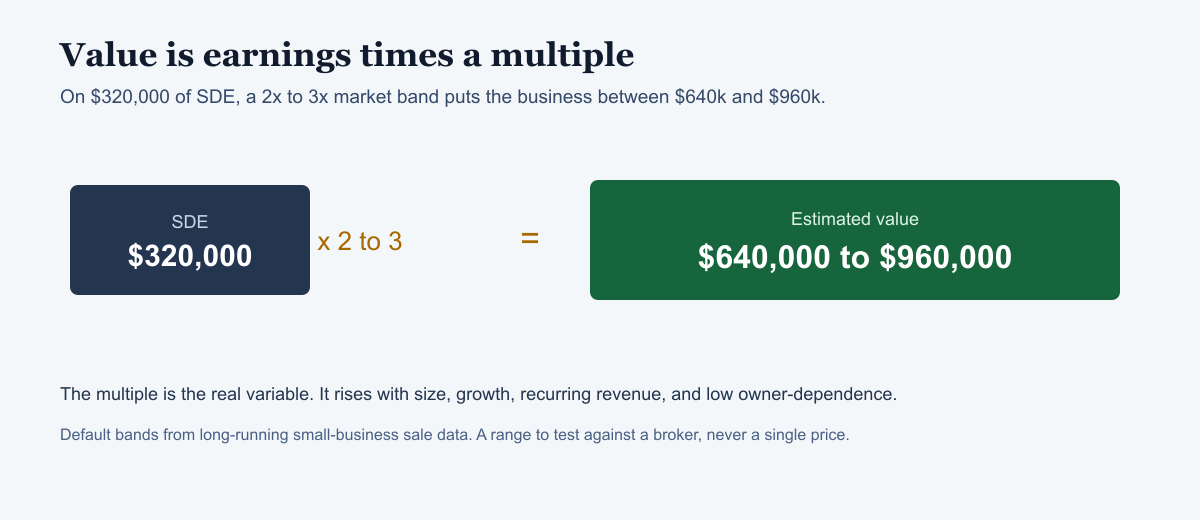
A small business sells for a multiple of its earnings, once those earnings are recast the way a buyer sees them. Put your numbers in for a range. It's a starting point for a conversation, not a number to put in a contract.
Estimated value
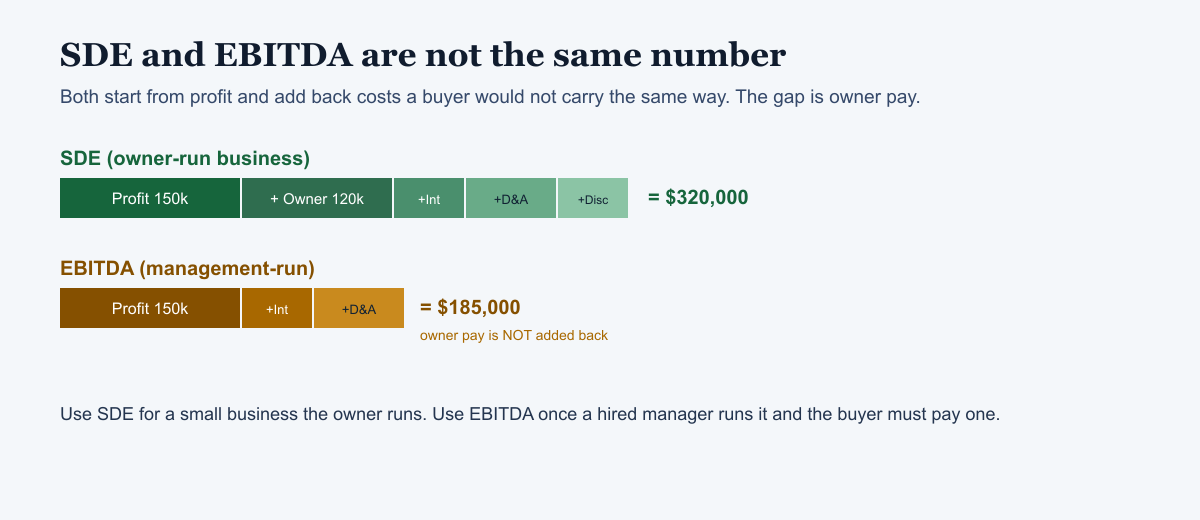
SDE or EBITDA, and why it matters
Both start from profit and add back costs a new owner wouldn't carry the same way. The difference is one line, and it moves the answer a lot. SDE adds your entire pay back in, because a buyer of a small, owner-run business is buying your seat and your salary with it. EBITDA does not, because a bigger business runs on a hired manager the buyer still has to pay. Use SDE for an owner-operated shop, EBITDA once the business runs without you.
The multiple is where the real range lives. It rises with size, growth, recurring revenue, and a low dependence on you, and it falls without them. The defaults here are a broad market band, not your number: a specialized, fast-growing business earns more, a fragile or owner-dependent one earns less.
Default multiples reflect long-running small-business sale data (BizBuySell Insight Report; IBBA and M&A Source Market Pulse), reviewed July 2026. This is an estimate, not a valuation or advice. A sale, a raise, or a dispute needs a professional appraisal or a quality-of-earnings review. If you're buying rather than selling, the financing router and the SBA payment calculator price the acquisition debt, and the valuation section covers the deal work.
Get the earnings right first
The multiple gets the attention, but the earnings figure is where most of the error lives. SDE adds the owner's pay and perks back to profit; EBITDA doesn't. Feeding the wrong one into a multiple is the fastest way to a wrong number.

What moves the multiple
Two businesses with the same earnings sell for different multiples. Recurring revenue, customer concentration, growth, and how dependent the business is on the owner all push it up or down. The range here is a starting point, not an appraisal.