Is a cost segregation study worth it?
A study moves part of your building into short-life property that can be expensed now, and in 2026 bonus depreciation is back to 100%. This estimates the first-year tax benefit against the study's cost, so you can see whether it pays before you commission one.
First-year estimate
Read this before you commission one
The number above is a first-year cash benefit, and it is real, but it is a deferral, not a discount. You're pulling deductions forward, not creating new ones, so later years have less to deduct, and when you sell, depreciation recapture takes some of it back. The true economic gain is the time value of holding that cash for years, which is large when you'll keep the building a long time and small if you're about to flip it.
The rule of thumb the study firms won't lead with: below roughly $500,000 of building basis, a fixed study fee often eats too much of a modest benefit to bother, especially without 100% bonus. Above a few million, it's usually a straightforward yes. The calculator shows you where your own numbers land.
100% bonus depreciation for property acquired after Jan 19, 2025: IRS, One Big Beautiful Bill provisions (IRC 168(k), Notice 2026-11), verified July 2026. Estimate only, not tax advice.
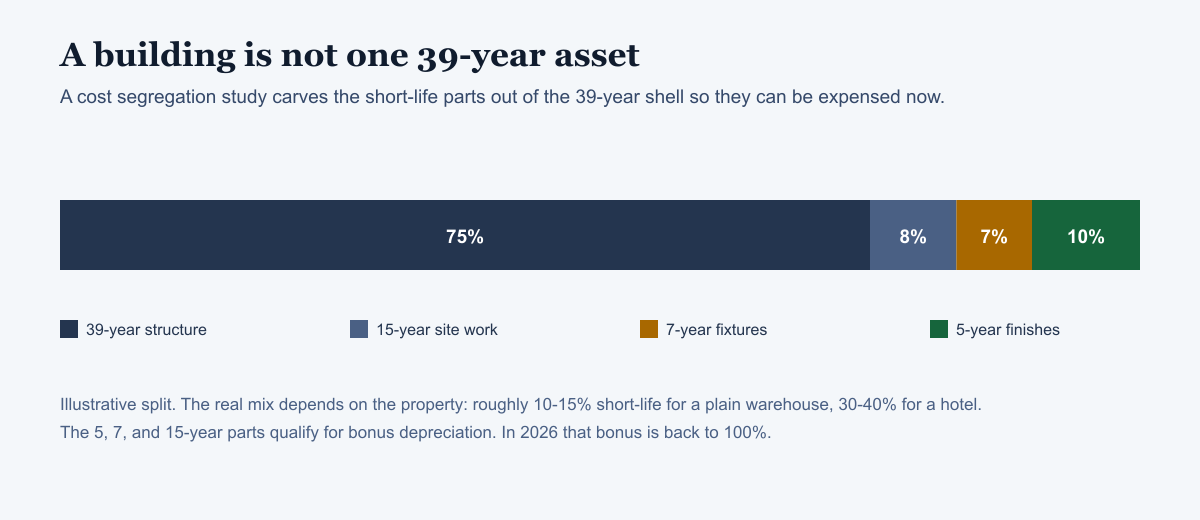
Why the first-year number is so large
Reclassified property is eligible for 100% bonus depreciation again, so the deductions that used to spread over decades land in year one. That's the swing the calculator is showing, and it's why the study fee is small against the benefit for the right building.
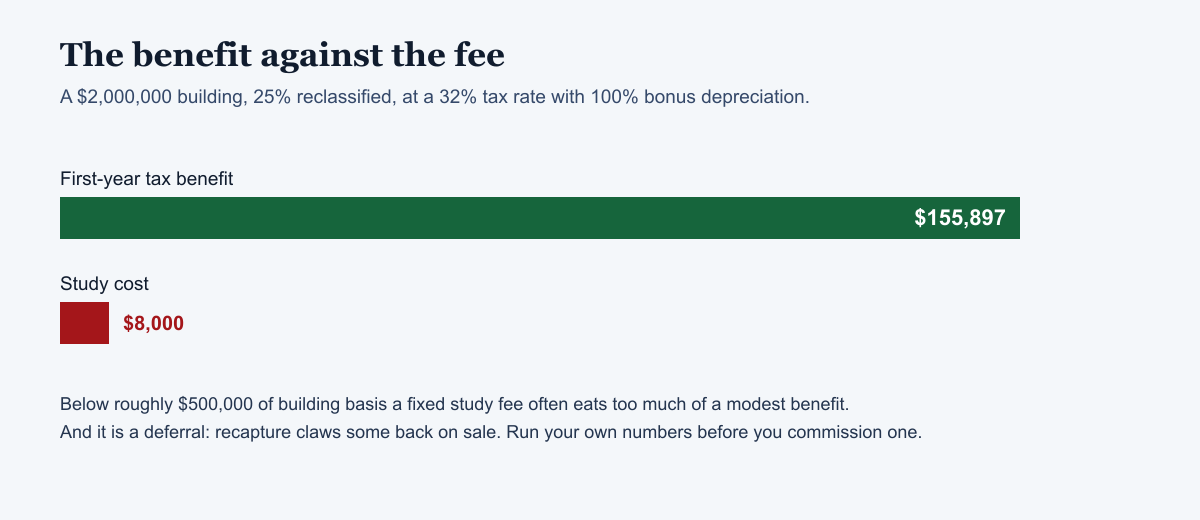
When it's worth commissioning
The fee only pays off if you'll hold the property long enough to keep the accelerated deductions, and if your basis is high enough for the reclassified share to matter. Newly bought, built, or renovated buildings are the usual candidates.