Equipment financing: lease vs loan, real cost
The vendor sells the low monthly lease payment. Compare the total cost to own equipment with a loan or a lease, and let your hold period break the tie.
Equipment financing comes down to one comparison the vendor won’t make for you: the total cost to own the equipment with a loan, against the total cost with a lease. The lease almost always has the smaller monthly payment, which is exactly why the monthly payment is the wrong number to compare. What matters is what you pay over the whole term, and what you own when it’s done.
On $100,000 of equipment, a loan might run $10,000 down plus $1,868 a month for five years, and you own it at the end. A lease might be $1,600 a month with a $10,000 buyout to keep it. The lease’s monthly payment is lower, but add it all up and the totals tell a different story than the two monthly figures do.
Compare the total, not the monthly
Put both offers side by side on the thing that matters, the total cost to end up owning the equipment. The loan total is your down payment plus every payment. The lease total is every payment plus the buyout, if you intend to keep it.
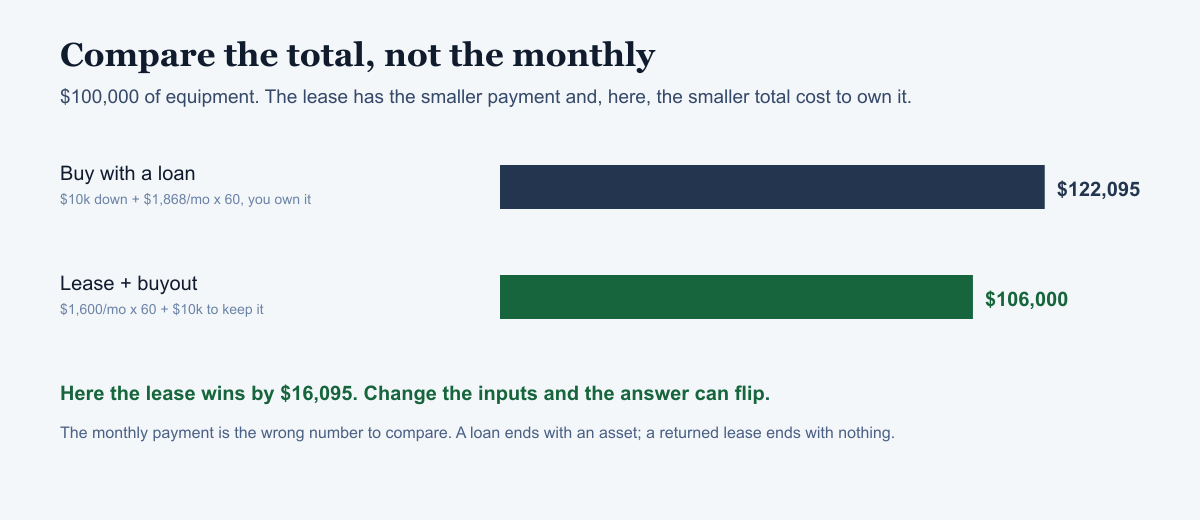
The lease vs loan calculator does this side by side: enter both offers and it returns the total cost each way and names the cheaper one. It’s the honest comparison because the answer genuinely depends on your specific numbers, not on which product a salesperson is paid more to move.
The real deciding question: how long will you keep it
Cost is only half the decision. The other half is whether you’ll want the equipment long after you’ve paid for it, and that’s usually what breaks the tie.
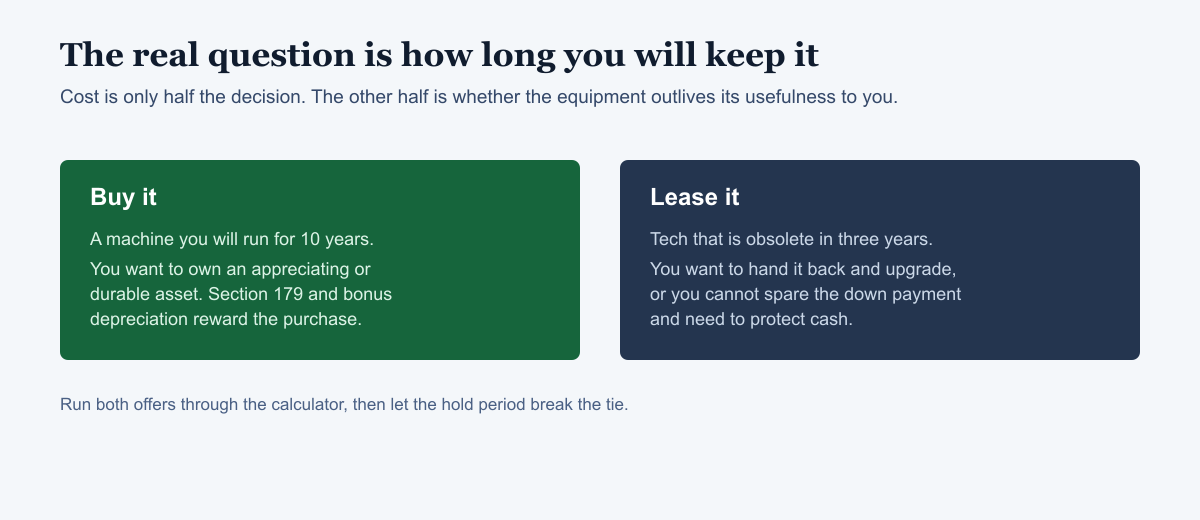
Buy when you’ll run the equipment for years. A loan leaves you owning a durable asset, and the purchase qualifies for Section 179 expensing and bonus depreciation, which is back to 100% in 2026. That tax treatment can swing the after-tax cost of buying well below the sticker comparison.
Lease when the equipment goes obsolete fast, like technology that’s outdated in three years, so you can hand it back and upgrade instead of owning a paperweight. Lease, too, when you can’t spare the down payment and need to protect cash, since a lease usually asks for little or nothing up front.
Where the rate actually matters
Equipment loan rates swing widely with your credit, your time in business, and the equipment itself, often from the high single digits into the twenties. That range is real, but it’s not where most owners lose money. They lose it by comparing a lease’s low monthly to a loan’s higher one and stopping there, without counting the down payment, the buyout, or the asset they walk away owning.
Run the total both ways first, then let the rate and the hold period decide. If equipment is one piece of a bigger capital need, the financing router will place it against your other options, and the rest of the financing section covers the structures around it. This is an estimate and a summary, not tax or financial advice: the Section 179 math in particular depends on your situation, so confirm it with your CPA.