179D and 45L: the energy tax breaks just closed
The One Big Beautiful Bill sunset the 179D deduction and the 45L credit, both closed for projects after June 30, 2026. What they were worth, and what still counts.
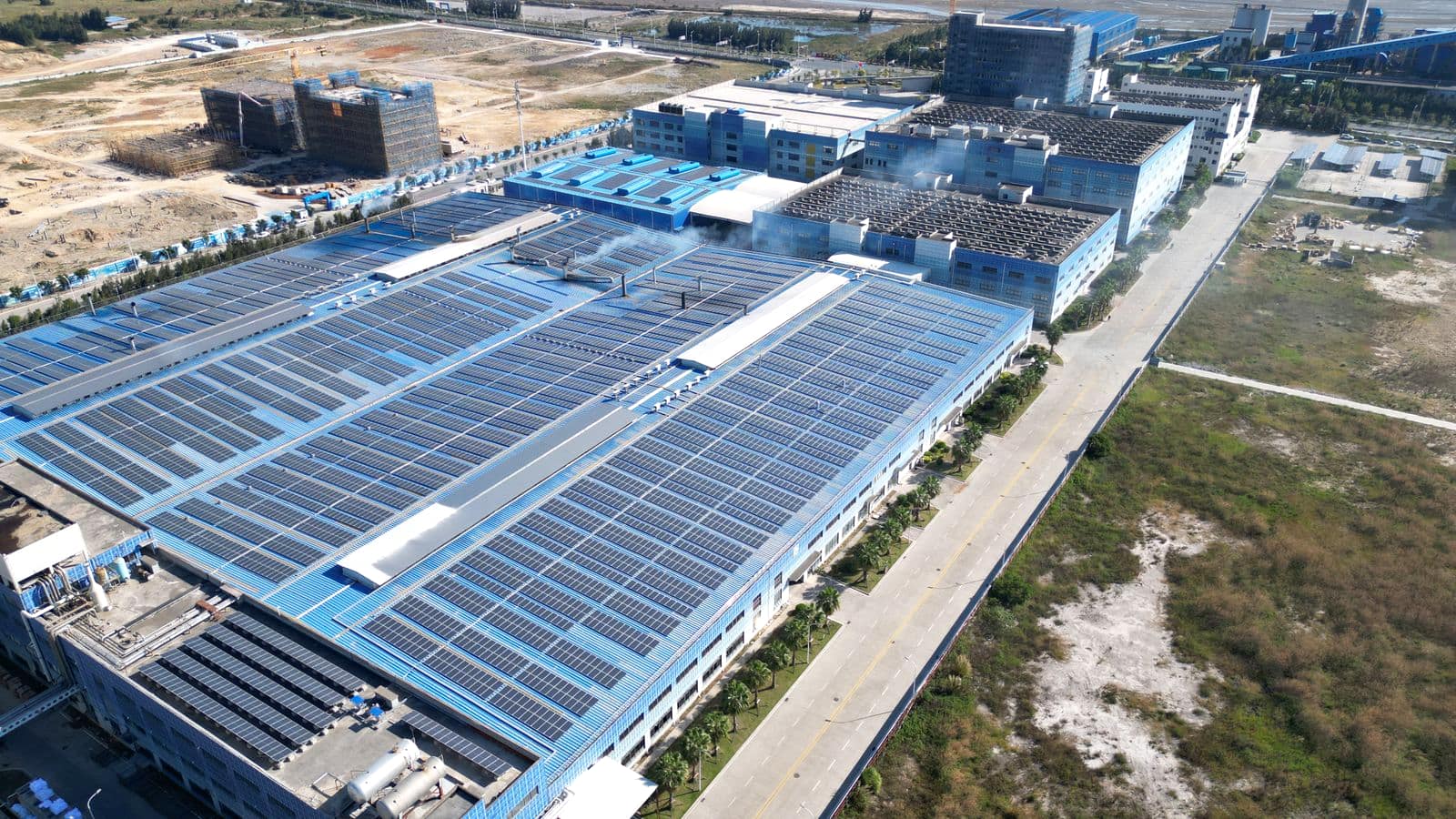
The two big federal tax breaks for energy-efficient building, the 179D deduction and the 45L credit, have closed to new projects. The One Big Beautiful Bill terminated 179D for any commercial building whose construction begins after June 30, 2026, and 45L for any qualified new home acquired after that same date. Those deadlines have now passed, so if you’re planning a new project, the federal incentive that used to help pay for the efficiency upgrades is gone.
There’s one meaningful exception, and it’s worth knowing: 179D turns on when construction begins, not when it finishes. A commercial project that broke ground on or before June 30, 2026 still earns the deduction when it’s completed, even if that’s well into 2027. If you have a building underway, that deduction may still be yours. For everything new, the window is shut.
Two incentives, one deadline
Both credits came out of the same energy-policy push and were sunset together, on the same date, by the same bill.
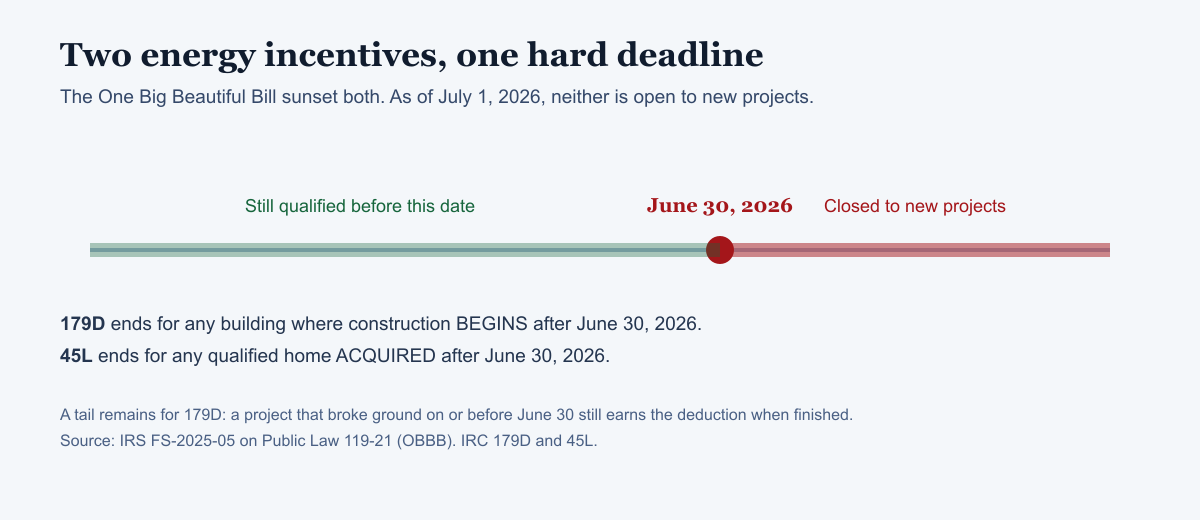
The distinction between the two triggers matters. For 179D, what counts is when construction begins, so a project already started keeps its deduction. For 45L, what counts is when the finished home is acquired by a buyer or renter, and after June 30, 2026 there’s no credit for it regardless of when it was built. If you’re a developer with completed homes closing this summer, the acquisition date is the line that decides whether the credit survives.
What they were worth
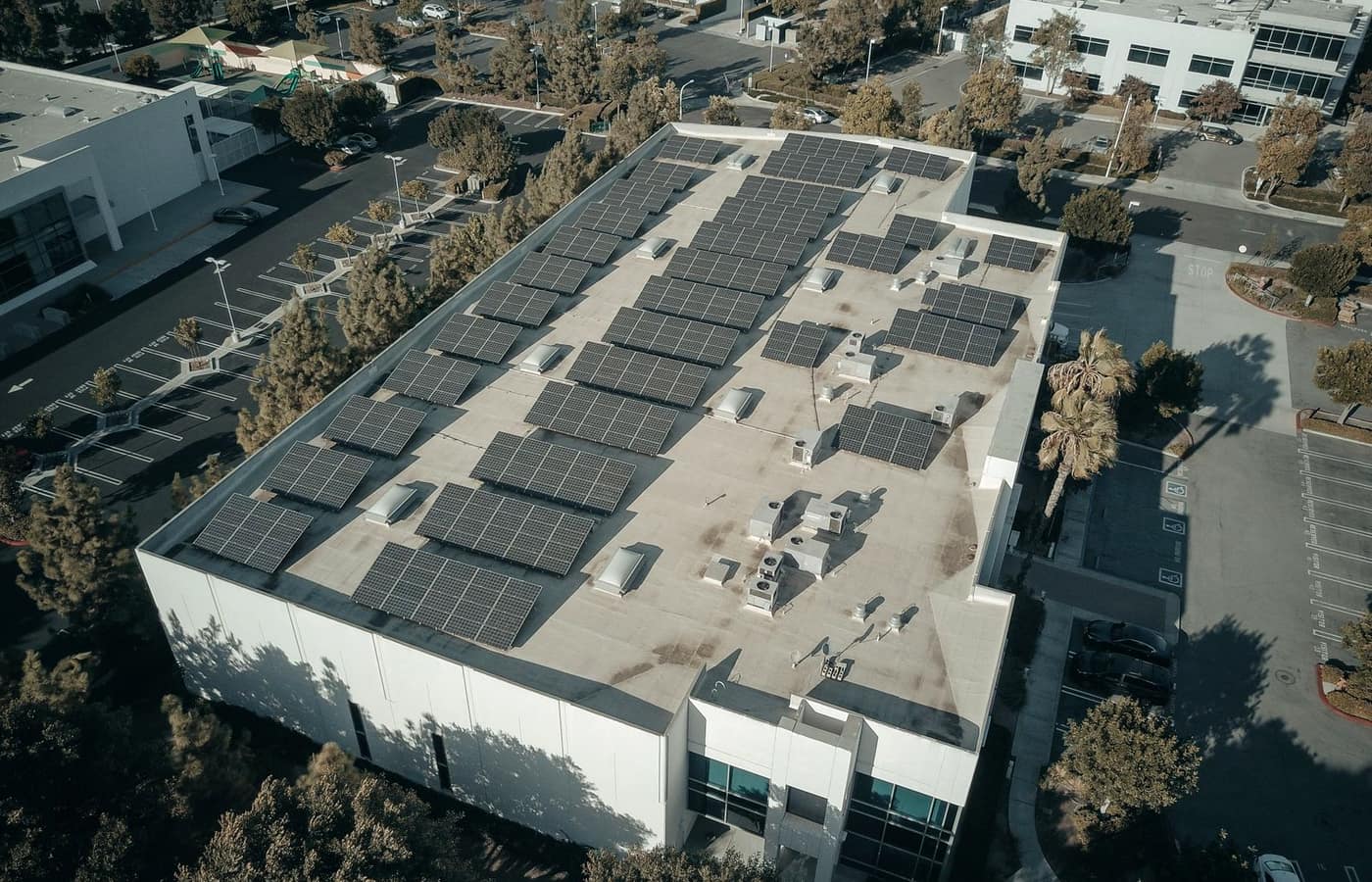
While they lasted, both were substantial, and both had a two-tier structure: a lower base amount, and a much higher amount for projects that met prevailing-wage and apprenticeship requirements.
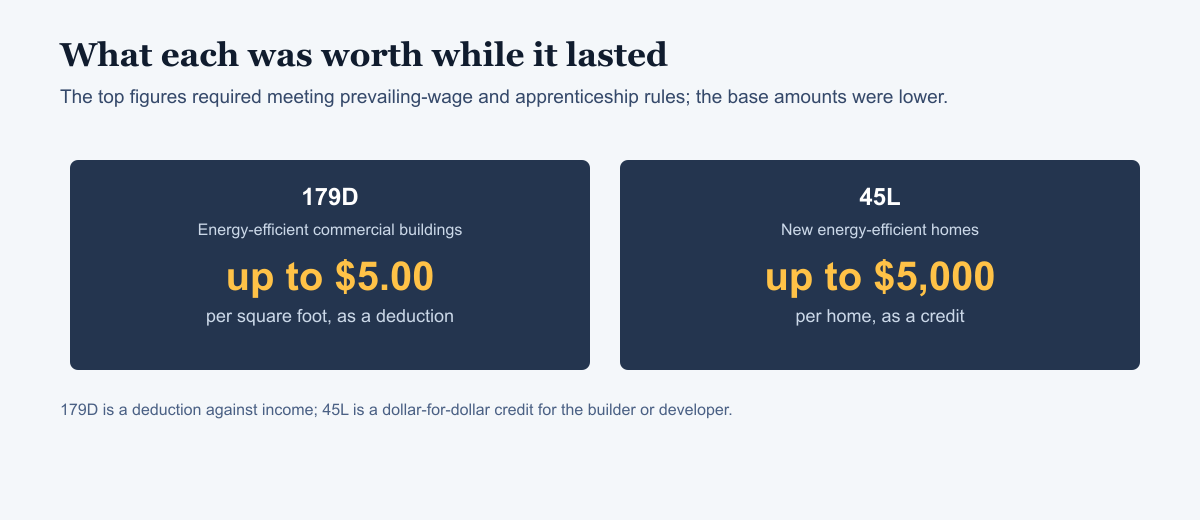
179D was a deduction, worth up to $5.00 per square foot, that reduced taxable income for owners and, through allocation, for the designers of government and tax-exempt buildings. On a large building, that added up fast. 45L was a dollar-for-dollar credit of up to $5,000 per home, claimed by the builder or developer rather than the homeowner, which is why it shaped how efficiently new housing got built. Both are now off the table for new work.
What to do now
If you have a 179D project that began construction on or before June 30, 2026, document the start date carefully and claim the deduction when the building is placed in service. That’s the one live path left, and the start date is the fact an examiner will look at first.
For new projects, the efficiency upgrades can still pay for themselves through lower operating costs, they just no longer come with this federal tax break, so run the numbers without it. And the incentive that’s still very much alive on the buildings you own is cost segregation, which pairs with 100% bonus depreciation to pull real deductions forward. Read the rest of the tax incentives section for what survived into 2026, and check the current rules on the IRS OBBB guidance before you rely on a number. This is a summary of the law as of July 2026, not tax advice: confirm your own eligibility and dates with a CPA.