409A valuation cost: what startups pay in 2026
A 409A valuation runs from $499 on an AI platform to $20,000 at a Big Four firm. Most startups pay $1,500 to $5,000. What drives the price, and what it buys.

A 409A valuation costs anywhere from about $499 to $20,000 or more in 2026, and most venture-backed startups pay between $1,500 and $5,000. What sets your price is less about how big your company is and more about how complex your cap table is: a clean Series A costs less than a seed round with a stack of SAFEs and convertible notes layered on top. Getting one is not optional once you grant employee options, and the reason is a tax rule with real teeth.
The wide price range trips up founders because the providers at each end are selling genuinely different things. Here is what each tier costs, what actually drives the number, and what a 409A buys you that makes it worth paying for at all.
What it costs, by who does it
The market splits into three tiers, and they don’t overlap much.
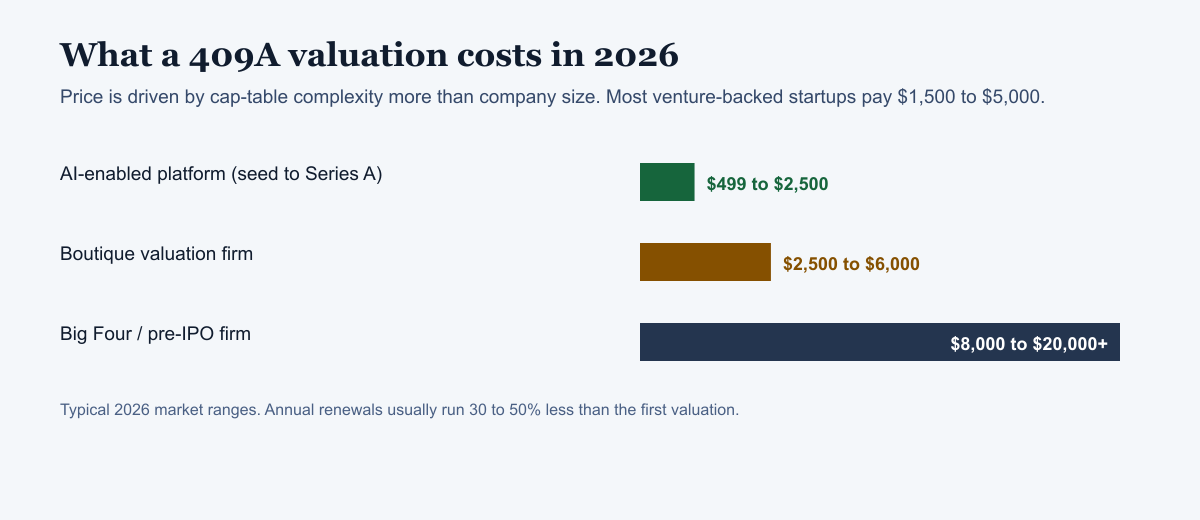
AI-enabled platforms produce a reviewable valuation for $499 to $2,500 and suit a seed or Series A company with a simple structure. Boutique valuation firms run $2,500 to $6,000 and add a human analyst and more defensibility. Big Four and specialist firms charge $8,000 to $20,000 and up, which is what a late-stage or pre-IPO company needs when the valuation will face real scrutiny. The right tier is the cheapest one that still holds up for your stage.

What you’re actually buying: a safe harbor
A 409A isn’t paperwork for its own sake. It sets the strike price of your employee stock options at the fair market value of your common stock, and it buys you a safe harbor: for 12 months, the IRS presumes that strike price is reasonable, and the burden is on them to prove otherwise.
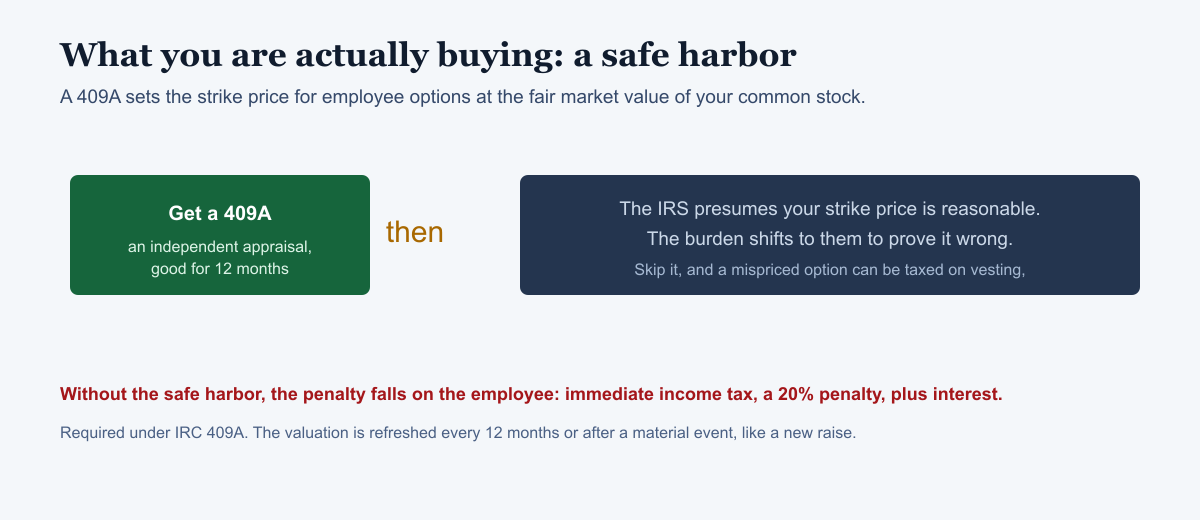
Skip it, and the downside lands on the wrong person. If the IRS decides options were granted below fair market value without a defensible valuation, Section 409A can tax the option holder as it vests, not when they sell, and add a 20% federal penalty plus interest on top. That penalty falls on your employees, the people you granted the options to reward. A few thousand dollars for a valuation is cheap insurance against handing your team a surprise tax bill.
What drives your price, and when to refresh
Two things move your number. The first is cap-table complexity: preferred stock with different rights, SAFEs, convertible notes, warrants, and side letters all add work and cost. The second is your stage and how much scrutiny the valuation will face. A pre-IPO 409A gets read by auditors and bankers, so it’s built more carefully and costs more.
You also can’t buy one and forget it. A 409A is good for 12 months or until a material event, whichever comes first, and a new funding round is a material event. So a growing startup refreshes it roughly annually, at a renewal price usually well below the first.
A 409A values your common stock for option pricing, which is a different question from what the whole business is worth to a buyer. For that, the business valuation calculator and the guide to valuation multiples cover the earnings-and-multiple approach a sale runs on, and the rest of the valuation section covers the diligence that follows. These 409A figures are typical 2026 market ranges, not a quote, and the requirement itself is a matter of tax law: this is general information, not tax or legal advice, so confirm your own situation with a qualified provider and your counsel.